

How to Talk to Your Kids About Pet Loss: A Parent’s Guide
Reviewed by Dr. Robin Teague, DVM (Colorado); Dr. Tracey Decter, DVM (Florida); Dr. Caroline Garrett, DVM, DACLAM (Utah); and Rob Twyning, PEP (Wisconsin) – The Pet Loss at Home Medical Advisory Team
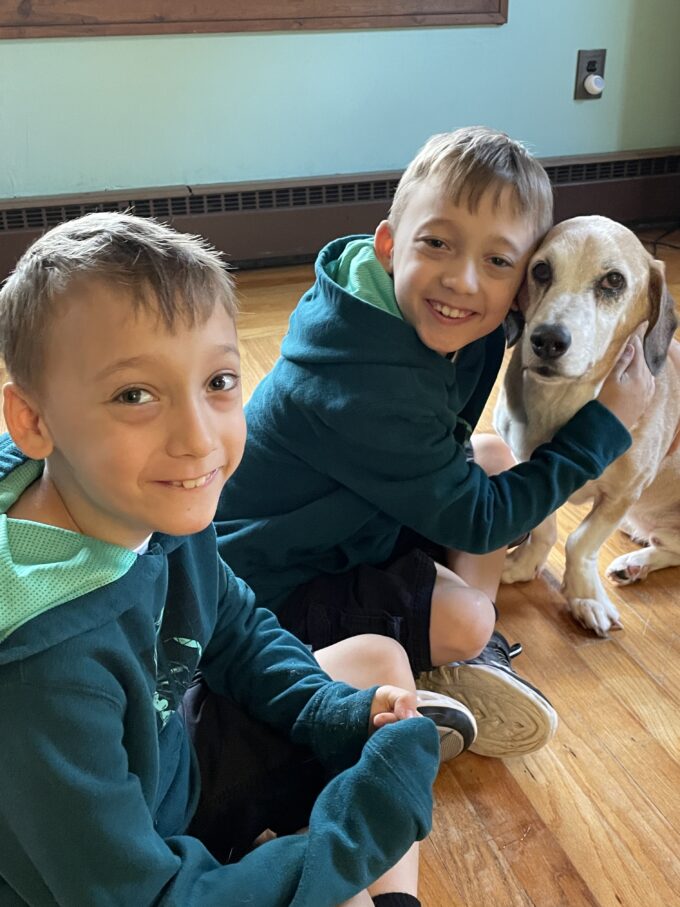
“Winnie”
Passed peacefully in 2022 in the comfort of their own home with the help of Pet Loss at Home.
Key Takeaways:
- Honest, age-appropriate language helps children process loss more healthily than euphemisms.
- Children benefit from being given a choice about whether to be present during the goodbye.
- Grief looks different at different ages — what a toddler needs is different from what a teenager needs.
- Let children’s questions guide the conversation rather than providing more information than they’re ready for.
- Modeling grief — letting children see that you are sad too — normalizes their own feelings.
Children often understand more than we expect, and grieve more deeply than we realize. Honest, loving conversations are their best preparation.
For many children, the loss of a pet is their first direct encounter with death. How adults handle this moment — what language they use, what they share, what they protect children from — can shape how children understand and relate to loss for the rest of their lives.
The goal is not to eliminate a child’s grief. The goal is to give them a safe, honest framework for experiencing it.
Why Honesty Matters
Well-meaning euphemisms like “went to sleep,” “went to a farm,” and “passed away” can cause more confusion and anxiety than the truth. A child who is told their pet “went to sleep” may become afraid of their own bedtime. A child told their pet “went away” may wait for their return.
Child development researchers and grief counselors consistently recommend honest, clear language: the pet died, which means their body stopped working and they will not come back. This language is harder to say, but it gives children something real to process.
Age-by-Age Guidance
Toddlers and Preschoolers (Ages 2–5)
Very young children do not have a fully developed concept of the permanence of death. They may ask repeatedly where the pet is, or seem to move on quickly and then revisit grief unexpectedly. Both are normal.
- Use simple, concrete language: “[Pet’s name] died. That means their body stopped working and they won’t be coming back.”
- Expect the question to be asked multiple times. Answer it the same way each time.
- Allow them to say goodbye to the pet’s body if they want to, but do not force it.
- Maintain routines as much as possible — consistency is deeply reassuring at this age.
School-Age Children (Ages 6–12)
Children in this age group understand the permanence of death and may ask specific, direct questions about what happened. They may also experience visible grief — crying, anger, or withdrawal.
- Answer questions honestly and directly. If you don’t know the answer to something, it’s okay to say so.
- Give children a choice about whether to be present during euthanasia. Most children who choose to be present handle it well when they are gently prepared.
- Validate all feelings: sadness, anger, and even laughter or apparent indifference are all normal.
- Consider a ritual: a small ceremony, planting something in the garden, or creating a memory book.
Teenagers (Ages 13+)
Teenagers typically have a full understanding of death and may grieve deeply, though they may not always show it in visible ways. They may retreat to their room, express grief through humor, or appear unaffected publicly while struggling privately.
- Treat them as the young adults they are — include them in decisions and conversations if they want to be included.
- Don’t force conversation, but make yourself available.
- Acknowledge your own grief openly. Teenagers benefit from seeing that adults grieve too.
- Watch for signs of more serious distress — extended isolation, loss of interest in everything, or statements that suggest hopelessness.

“The families I visit who handle this best with their kids are the ones who let the kids feel something real. They don’t protect them from grief. They sit in it together.”
Rob Twyning, PEP & Owner — Pet Loss at Home

Whether to Include Children in the Goodbye
This is one of the most common questions parents ask. Research and clinical experience both suggest that children who are given an honest, age-appropriate explanation and then offered a choice rather than having the decision made for them tend to cope better.
A child who says goodbye has a concrete memory of the farewell, which can be an important anchor in grief. A child who is excluded may feel left out, may imagine something worse than what happened, or may feel that their grief was not considered.
If a child is uncertain, it is okay to bring them to the room and allow them to leave if they choose. The veterinarian will guide the process gently regardless of who is present.
Taking Care of Yourself
Children take emotional cues from their parents. If you are deeply distressed and trying to hide it completely, children may pick up on the anxiety without having context for it. Letting children see that you are sad in a measured, non-frightening way normalizes their own feelings and shows them that it is safe to grieve.
You do not have to have all the answers. “I don’t know” is a complete and honest response. “I’m sad too” is one of the most helpful things you can say.

We're Here to Help Your Family
Call (877) 219-4811. Our care coordinators can talk through what to expect
and how to prepare your children.

Frequently Asked Questions
Should I use the word 'died' with my young child?
Yes, when appropriate to their developmental stage. Clear, concrete language — “died” rather than “passed away” or “went to sleep” — helps children form an accurate understanding of what has happened and avoids confusion or anxiety that euphemisms can cause.
My child doesn't seem upset. Is that normal?
Yes. Children, particularly younger ones, may not show visible grief immediately, or may seem fine and then become upset days or weeks later. This does not mean they are unaffected. Children grieve in waves, often returning to play or normal activity between periods of sadness.
Should my child be allowed to say goodbye to the pet's body?
Offering the choice is generally recommended. Many children find comfort in a concrete goodbye. Explain calmly what they will see beforehand, and allow them to decide. Never force a child to be present, but do not assume they cannot handle it.
What if my child asks if they caused the pet's death somehow?
This is a common fear, particularly in younger children. Reassure them directly and clearly: nothing they did caused this. The pet became very sick, or very old, and their body stopped working. This is something that happens and is not anyone’s fault.

How We Created This Guide
This page was developed in collaboration with licensed veterinarians who specialize in end-of-life pet care. All clinical guidance has been reviewed for medical accuracy. Our editorial process prioritizes compassion, clarity, and evidence-based information to help families navigate one of the hardest decisions they will ever face.