When Is It Time to Euthanize?
Reviewed by Dr. Robin Teague, DVM (Colorado); Dr. Tracey Decter, DVM (Florida); Dr. Caroline Garrett, DVM, DACLAM (Utah); and Rob Twyning, PEP (Wisconsin) – The Pet Loss at Home Medical Advisory Team
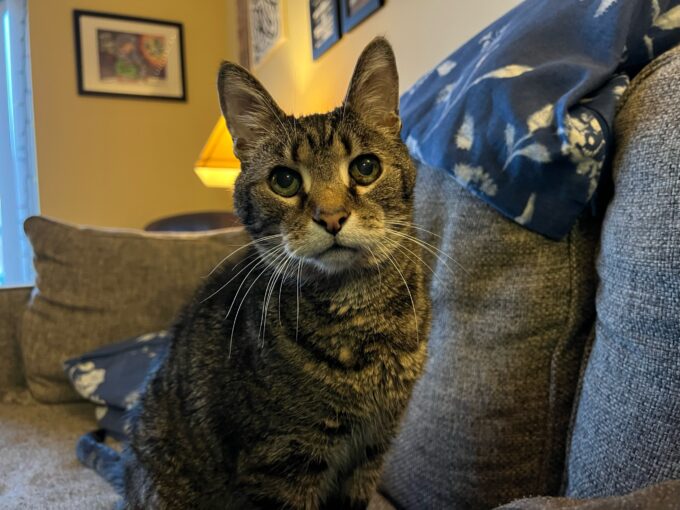
“Marco”
Passed peacefully in 2022 in the comfort of their own home with the help of Pet Loss at Home.
Key Takeaways:
- There is no single “right” moment — but there are clear signs that the time is near.
- Veterinarians consistently find that waiting too long is more common than acting too soon.
- Quality of life — not quantity of life — is the guiding principle.
- The HHHHHMM Scale provides a structured way to assess whether your pet is experiencing more comfort than suffering.
- This decision is an act of love, not a failure. Choosing to end suffering is one of the most compassionate things a pet owner can do.

If you’re searching for this answer, you’re already carrying a weight that few people outside of pet ownership fully understand. You’re not alone. You’re not wrong to be asking.
The question of when to euthanize a beloved pet is one of the most emotionally difficult decisions a person can face. There is no algorithm that produces a clean answer, and there is no moment that feels entirely certain. What there is, is a body of compassionate veterinary guidance, a set of observable signs, and a quality of life framework that can help bring clarity to one of life’s hardest crossroads.
This page is not here to make the decision for you. It is here to help you see your pet clearly, so that when the time comes, you can act with confidence and with love.
What Is Euthanasia For Pets?
Pet euthanasia is a medical procedure in which a veterinarian administers a carefully calibrated overdose of an anesthetic agent, causing a rapid, peaceful, and painless death. It is used when a pet’s quality of life has deteriorated to a point where continued living causes more suffering than comfort. Veterinarians consider it the most compassionate option when pain and decline can no longer be adequately managed.

Signs That the Time May Be Near
Veterinarians who specialize in end-of-life care look for consistent patterns rather than single events. The following signs, particularly when appearing together or persisting over time, suggest that a quality of life conversation is appropriate:
- Pain that cannot be adequately controlled with medication
- Inability or significant difficulty eating and drinking
- Loss of the ability to perform basic bodily functions without distress
- Inability to stand, walk, or reposition without assistance
- Complete loss of interest in interaction, surroundings, or activities once enjoyed
- Labored or distressed breathing
- More difficult days than comfortable ones, consistently over one to two weeks
- A terminal diagnosis with a documented trajectory toward greater suffering
The "More Good Days Than Bad" Principle
One of the most widely used frameworks in veterinary end-of-life care is the concept of tracking good days versus difficult ones. A “good day” is one in which your pet eats, engages with their environment, finds comfort, and shows some spark of their personality. A “difficult day” is one marked by pain, distress, refusal to eat, inability to move, or sustained withdrawal.
When difficult days begin to outnumber good ones, or when the good days are no longer genuinely good but simply “less bad”… veterinarians generally consider this a meaningful threshold.

“Families often ask me, ‘How will I know?’ I tell them: when you find yourself hoping your pet will slip away in the night because you can’t bear to watch them suffer another day, you already know.”
Rob Twyning, Owner — Pet Loss at Home
Common Questions Families Ask Themselves
These are the questions that tend to occupy families in the weeks before a decision is made. They are not clinical criteria, but they matter, and they are worth sitting with.
- Am I prolonging my pet’s life for their sake, or for mine?
- Is my pet having any moments of genuine comfort, joy, or connection?
- Is the treatment or management causing additional suffering?
- If my pet could tell me what they wanted, what would they say?
- Have I spoken with a veterinarian who specializes in quality of life and end-of-life care?
What Veterinarians Want You to Know
End-of-life veterinarians consistently share one observation: families who wait too long suffer more, and so do their pets. The fear of acting too soon is natural and understandable — but in the vast majority of cases, the greater risk is waiting until suffering is severe.
Choosing euthanasia before a pet reaches a state of acute crisis allows the goodbye to be peaceful, unhurried, and surrounded by love rather than pain. That is a gift.
Use the HHHHHMM Quality of Life Scale to assess where your pet is today, and speak with one of our veterinarians if you’re unsure.
Frequently Asked Questions
How do I know when to put my dog or cat down?
Veterinarians recommend evaluating quality of life across multiple dimensions: pain management, nutrition, hydration, hygiene, happiness, and mobility. When most of these dimensions are significantly compromised — or when one critical dimension (like pain) cannot be managed — euthanasia is generally considered the most humane option. The HHHHHMM Scale is a structured tool that can help guide this assessment.
Is it better to euthanize too early or too late?
Veterinary consensus strongly suggests that acting before suffering becomes severe leads to better outcomes for both pets and families. A pet euthanized before reaching a crisis state is able to pass peacefully and without acute distress. A pet who reaches that crisis point has experienced unnecessary suffering that a timely decision could have prevented.
Will I feel guilty after making this decision?
Many families experience guilt, grief, or doubt after making this decision — even when it was clearly the right one. These feelings are a reflection of deep love, not a sign that the decision was wrong. Families who worked through a structured quality of life assessment and made a thoughtful, informed decision typically find over time that their grief is accompanied by a sense of peace.
Can I be with my pet during euthanasia?
Yes. In-home euthanasia specifically allows families to be fully present in a comfortable, familiar setting. You may hold your pet, speak to them, and take as much time as you need before and after. Many families describe being present as one of the most meaningful parts of the farewell.
What if I’m still not sure?
A quality of life consultation with a Pet Loss at Home veterinarian does not commit you to any particular decision. It is simply a conversation — an opportunity to see your pet’s situation clearly and understand what your options are. Call (877) 219-4811 to schedule a consultation.

How We Created This Guide
This page was developed in collaboration with licensed veterinarians who specialize in end-of-life pet care. All clinical guidance has been reviewed for medical accuracy. Our editorial process prioritizes compassion, clarity, and evidence-based information to help families navigate one of the hardest decisions they will ever face.