Quality of Life for Dogs & Cats:
How to Know When It's Time
Reviewed by Dr. Robin Teague, DVM (Colorado); Dr. Tracey Decter, DVM (Florida); Dr. Caroline Garrett, DVM, DACLAM (Utah); and Rob Twyning, PEP (Wisconsin) – The Pet Loss at Home Medical Advisory Team
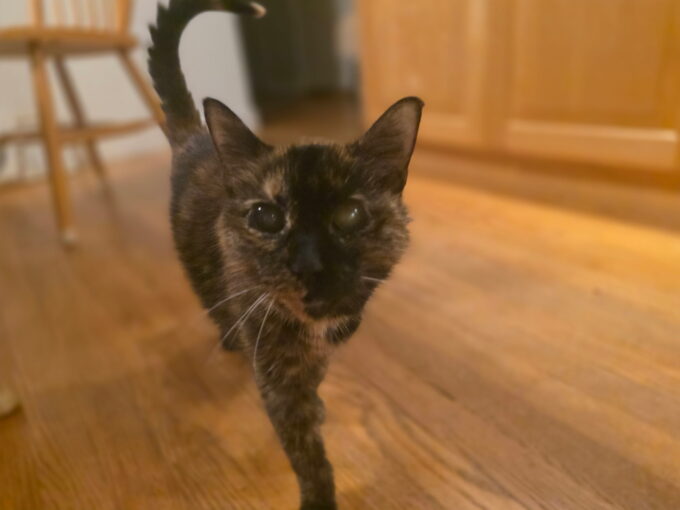
“Thelma”
Passed peacefully in 2022 in the comfort of their own home with the help of Pet Loss at Home.
Key Takeaways:
- Quality of life assessment helps families make informed, compassionate decisions… not rushed ones.
- The HHHHHMM Scale evaluates seven core dimensions: Hurt, Hunger, Hydration, Hygiene, Happiness, Mobility, and More good days than bad.
- Dogs and cats show pain and decline differently. Knowing what to look for in your specific pet matters.
- There is no single “right” moment. The goal is to prevent prolonged suffering while honoring the bond you share.
- In-home euthanasia allows your pet to pass peacefully in a familiar, loving environment.
- You don’t have to navigate this alone. Pet Loss at Home’s veterinarians are here to guide you.

If you’re reading this, you’re already doing one of the most loving things a pet owner can do: you’re asking the hard question.
Knowing when a beloved dog or cat has reached the end of a good life is not a failure, it is an act of devotion. But that doesn’t make it easy. For most families, this is uncharted territory, filled with uncertainty, guilt, and grief that often begins long before the final goodbye.
This guide is here to help. It will walk you through how veterinarians assess quality of life, what specific signs to watch for in dogs and cats, and how to use a trusted framework, the HHHHHMM Scale, to bring more clarity to one of life’s most difficult decisions.
There is no checklist that takes away the pain. But there is knowledge that can replace fear with understanding, and uncertainty with compassion.
What is a Quality of Life Scale?
A Quality of Life scale is a structured assessment tool used by veterinarians and pet owners to evaluate a pet’s overall physical comfort, emotional wellbeing, and daily functioning. These scales translate observable signs and behaviors into a consistent framework that helps guide end-of-life decision-making with compassion and clarity.
Understanding the HHHHHMM Quality of Life Scale
The HHHHHMM Scale was developed by veterinary oncologist Dr. Alice Villalobos and is one of the most widely used quality of life frameworks in veterinary medicine. It evaluates seven dimensions of a pet’s life, helping families and their veterinarians assess whether their pet is experiencing more comfort than distress – and more good days than bad.
DIMENSION
WHAT TO ASSESS
H
HURT
Is your pet’s pain being successfully managed? Can they breathe comfortably? Uncontrolled pain is one of the most significant indicators that quality of life has declined.
H
HUNGER
Is your pet eating enough to maintain their body weight? Nutritional decline and disinterest in food are common signs of serious illness.
H
HYDRATION
Is your pet drinking adequately and staying hydrated? Dehydration can cause significant suffering and is a key clinical marker.
H
HYGIENE
Can your pet be kept clean and free from sores, wounds, or odor? Are they able to groom themselves, or is assistance required?
H
HAPPINESS
Does your pet still show interest in life — in you, in play, in their favorite activities? Are they expressing joy or connection, even in small ways?
M
MOBILITY
Can your pet move enough to engage in basic daily activities? Can they reposition themselves to avoid pain? Is mobility loss causing distress?
M
MORE GOOD DAYS THAN BAD
Taken as a whole, are your pet’s good days outnumbering the difficult ones? This final dimension invites a holistic view of your pet’s lived experience.
HOW TO SCORE THE HHHHHMM:
Veterinarians recommend scoring each dimension on a scale of 1 to 10, with 10 representing ideal comfort or function. A total score of 35 or above (out of 70) is generally considered an acceptable quality of life. However, this number is a guide and not a verdict. A low score in a single critical dimension, such as uncontrolled pain, may be more meaningful than an average across all seven.

"Quality of life scales don’t make the decision for you. They help you see your pet clearly, even when grief makes it hard to."
~Rob Twyning, PEP & Owner of Pet Loss at Home

Quality of Life Assessment for Dogs
Dogs are expressive animals, but they are also remarkably stoic. Many dogs will mask pain instinctively, making it harder for even attentive owners to recognize when they are suffering. Understanding the specific behavioral and physical signs of decline in dogs is an essential part of quality of life assessment.
Signs That a Dog's Quality of Life May Be Declining
- Persistent or worsening pain that is not controlled by medication
- Loss of appetite or significant, unexplained weight loss
- Difficulty breathing, chronic coughing, or labored respiration
- Inability to stand, walk, or reposition without help
- Loss of bladder or bowel control, or visible distress around elimination
- Withdrawal from family interaction and loss of interest in surroundings
- Confusion, disorientation, or apparent loss of recognition
- Persistent vomiting, diarrhea, or difficulty eating or drinking
- Unhealing wounds, chronic skin conditions, or persistent infections
How Dogs Express Pain
Dogs in pain may pant excessively, pace restlessly, or become unusually quiet and withdrawn. Some dogs become irritable or react defensively to touch in areas that previously caused no discomfort. A dog who no longer greets you at the door, no longer engages with toys, or who seems mentally “absent” may be experiencing a significant decline in wellbeing.
It is worth noting that a wagging tail does not always indicate the absence of suffering. Dogs greet the people they love even when in pain. This is why a structured quality of life assessment, rather than a single behavioral observation, provides a more complete picture.
When to Have the Conversation with Your Veterinarian
If your dog is showing three or more of the signs above consistently over one to two weeks, or if a single critical sign, like uncontrolled pain or inability to breathe comfortably is present, it is time to speak with a veterinarian. This conversation is not a commitment to any particular path. It is information, and information is a gift you can give your dog.
Talk to a Vet About Your Dog's Quality of Life
Call (877) 219-4811 or use the ZIP locator at the top of the page to find a Pet Loss at Home veterinarian near you.

Quality of Life Assessment for Cats
Cats are masters of concealment. Evolved as both predator and prey, cats instinctively hide signs of illness and pain — which means that by the time a cat’s distress becomes visible, their condition is often already advanced. Quality of life assessment in cats requires patience, close observation, and an understanding of subtle behavioral shifts.
Signs That a Cat's Quality of Life May Be Declining
- Hiding in unusual locations or withdrawing from the household
- Significant loss of appetite, weight loss, or muscle wasting
- Changes in litter box behavior, including avoidance, straining, or accidents
- Difficulty grooming, matted coat, or noticeably unkempt appearance
- Labored or open-mouth breathing
- Inability to jump, altered gait, or reluctance to move
- Decreased or absent purring in a cat who previously purred often
- Vocalization - yowling, crying, or growling - particularly at night
- Glazed eyes, unresponsive demeanor, or loss of awareness
How Cats Express Pain Differently
Unlike dogs, cats rarely vocalize pain directly. Instead, they become still. A cat in significant pain may stop moving entirely, stop eating, and retreat to a hidden corner. Changes in facial expression, squinted eyes, flattened ears, a tense muzzle, are among the most reliable indicators of feline discomfort, though they require a trained or attentive eye to recognize.
Cats who are near the end of life often seek out warmth and proximity to their owners, even if they have been independent throughout their lives. If your cat is suddenly seeking closeness in a new way, pay attention.
Feline-Specific Quality of Life Considerations
Because cats decline quietly, many families find themselves surprised by how far a condition has progressed. Veterinarians recommend scheduling a quality of life consultation at the first sign of behavioral change, not when the decline is already severe. Earlier conversations lead to more compassionate outcomes.
Talk to a Vet About Your Cat's Quality of Life
Call (877) 219-4811 or use the ZIP locator at the top of the page to find a Pet Loss at Home veterinarian near you.
The Emotional Weight of This Decision
There is no perfect moment. There is only the moment when you decide that your love for your pet is greater than your need to hold on.
Families who are navigating end-of-life decisions for a pet are often dealing with anticipatory grief, the grief that begins before a loss occurs. They carry guilt (“Am I doing this too soon?”), fear (“Am I waiting too long?”), and exhaustion from the daily weight of watching a beloved animal struggle.
All of these feelings are valid. And all of them are expressions of love.
Quality of life assessment does not eliminate these emotions. But it does provide a framework that replaces some of the uncertainty with clarity. Families who have worked through a structured assessment often describe feeling more at peace with their decision — not because the decision was easy, but because they made it with intention, information, and love.
Why Families Choose In-Home Euthanasia
Once a family has made the decision that the time has come, many choose in-home euthanasia as the most compassionate option for both their pet and themselves. In-home euthanasia allows a pet to pass away in a familiar environment — on their favorite bed, in a loved one’s arms, surrounded by the sounds and smells of home.
For pets who experience significant anxiety in clinical settings, in-home euthanasia eliminates the distress of a final car ride and an unfamiliar room. For families, it allows for a private, unhurried goodbye.
Pet Loss at Home’s veterinarians come to you. They are trained not only in the clinical process, but in holding space for families during one of the most significant moments of their lives.
Learn more about what happens during in-home euthanasia, including what to expect, how to prepare, and how to support your family through the process.
After the Decision: What Comes Next
Making the decision is only one part of this journey. Families often find that having a clear sense of what comes next, both practically and emotionally, brings a measure of comfort during an overwhelming time.
Practical Next Steps
- Discuss aftercare options with your veterinarian: private cremation, communal cremation, home burial (where permitted), and aquamation are among the choices available.
- Consider a memorial: something like a paw print, a lock of fur, or a personalized keepsake, especially if that feels meaningful to your family.
- Give yourself and your family time. Grief for a pet is real grief, and it does not follow a schedule.
Supporting Your Family
Children and other pets in the household often need support through this process as well. Honest, age-appropriate conversations about death and loss can help children process their grief in healthy ways. Other pets in the home may show signs of behavioral change after the loss of a companion animal.
Visit our guides on How to Talk to Your Kids About Pet Loss and Pet Aftercare Options for more support.
We're Here When You're Ready
Call (877) 219-4811 or use the ZIP locator at the top of the page to find a Pet Loss at Home veterinarian near you.
Frequently Asked Questions
Making the decision is only one part of this journey. Families often find that having a clear sense of what comes next, both practically and emotionally, brings a measure of comfort during an overwhelming time.
How do I know if my pet is in pain?
Veterinarians assess pain through a combination of behavioral and physical signs. In dogs, pain often presents as panting, restlessness, loss of appetite, withdrawal, or resistance to being touched in certain areas. In cats, pain is typically expressed through stillness, hiding, changes in facial expression (squinted eyes, tense jaw), and a reluctance to move. Because both dogs and cats can mask pain instinctively, a veterinary quality of life consultation provides a more reliable assessment than behavioral observation alone.
What is the HHHHHMM scale?
The HHHHHMM Scale is a quality of life assessment framework developed by veterinary oncologist Dr. Alice Villalobos. It evaluates seven dimensions: Hurt, Hunger, Hydration, Hygiene, Happiness, Mobility, and More good days than bad. Each dimension is scored from 1 to 10, and a total score of 35 or higher is generally considered indicative of an acceptable quality of life. The scale is a guide to support decision-making, not a definitive threshold.
Is it better to act too early or too late?
Veterinarians who specialize in end-of-life care consistently note that waiting too long is the more common concern. Pets cannot communicate their suffering verbally, and their instinct to mask pain means that visible distress often indicates significant underlying discomfort. Acting before suffering becomes severe is widely regarded as a compassionate choice. That said, this is a deeply personal decision, and there is no single right answer for every family or every pet.
How is in-home euthanasia different from a clinic visit?
In-home euthanasia takes place in your pet’s familiar environment, allowing them to remain calm and comfortable throughout the process. There is no car ride, no unfamiliar clinical setting, and no separation from the people they love. Families have as much time as they need, before and after. The process itself is the same medically, a two-stage sedation and euthanasia solution, but the experience is meaningfully different for both pets and families.
Can I be with my pet during the process?
Yes. In-home euthanasia is specifically designed to allow families to be fully present. You may hold your pet, speak to them, or simply sit beside them. Many families find that being present, rather than leaving a pet in a clinical setting, is one of the most meaningful parts of the goodbye.
How do I talk to my children about this?
Age-appropriate honesty is generally recommended by child development experts and grief counselors. Younger children benefit from simple, concrete language rather than euphemisms. Older children and teenagers can often participate meaningfully in the farewell process if they choose to. Our guide on talking to kids about pet loss offers specific language and approaches for different ages.
What happens to my pet's remains?
Pet Loss at Home works with families to arrange aftercare based on their preferences. Options typically include private cremation (ashes returned to the family), communal cremation, home burial where local regulations permit, and aquamation (water-based cremation). Our veterinarians will walk you through all available options in your area.
How do I find a Pet Loss at Home veterinarian near me?
Pet Loss at Home serves families in cities and communities across the United States. Use the ZIP locator on our website to find a veterinarian in your area, or call (877) 219-4811 to speak with a care coordinator who can help you schedule a visit.

How We Created This Guide
This page was developed in collaboration with licensed veterinarians who specialize in end-of-life pet care. All clinical guidance has been reviewed for medical accuracy. Our editorial process prioritizes compassion, clarity, and evidence-based information to help families navigate one of the hardest decisions they will ever face.