


Preparing for an In-Home Goodbye

Reviewed by Dr. Robin Teague, DVM (Colorado); Dr. Tracey Decter, DVM (Florida); Dr. Caroline Garrett, DVM, DACLAM (Utah); and Rob Twyning, PEP (Wisconsin) – The Pet Loss at Home Medical Advisory Team

Trouper

“Trouper”
Passed peacefully in 2025, in the comfort of his own home with the help of Pet Loss at Home.

Key Takeaways:

  • There is no perfect way to prepare for this, but a few simple steps can help the day feel more peaceful.
  • Choose a location in your home where your pet is comfortable and your family feels at ease.
  • You decide who is present. There is no obligation for anyone to attend who is not ready.
  • Your veterinarian will guide you through each step. You will not be alone.
  • Giving yourself permission to grieve – before, during, and after passing is part of taking care of yourself.

There is no way to make this easy. But there are ways to make it peaceful. And peaceful is a gift - for your pet but also for you.

Choosing in-home euthanasia means choosing a goodbye that happens on your terms, in the place your pet knows best. That choice carries its own kind of comfort. But it also raises practical questions that many families have never had to consider before: Where should this happen? Who should be there? What will the day actually look like?

This guide answers those questions simply and honestly, so that when the day arrives, you can be fully present with your pet rather than navigating the unknown.

Choosing the Right Space

The location you choose should be wherever your pet feels most at ease. For many families, that is a favorite bed, a sun-soaked spot on the living room floor, or a garden where a dog has spent countless mornings. There is no clinical requirement, and the space is yours to choose.

  • Choose a space that is easy to access for you, your family, and the veterinarian.
  • Gather soft bedding, blankets, or your pet’s favorite comfort items in advance.
  • Minimize noise and distraction. Choose soft music, dim lighting, and a calm atmosphere to help.
  • If outdoors, consider the weather and choose a time of day that is comfortable.

Deciding Who Is Present

This is entirely your decision. Some families want everyone present — children, extended family, close friends. Others prefer a quiet moment with just one or two people. Both are equally right.

Considerations for Children

Whether to include children in the goodbye is one of the most common questions families ask. Child development experts generally recommend giving children the choice to be present rather than deciding for them. A child who wants to say goodbye and is gently prepared for what they will see typically handles the experience better than one who is excluded and left to imagine.

Be honest with children in age-appropriate language. Let them know that the veterinarian will help their pet sleep peacefully and that it will not hurt.

Other Pets in the Household

Whether to allow other pets to be present or to observe afterward is a personal choice. Some families find that allowing surviving pets to see their companion after passing helps reduce confusion and distress in the days that follow. Others prefer to keep surviving pets in another room. There is no clinical evidence strongly favoring either approach so just follow your instincts.

How to Prepare Your Pet

In most cases, no special preparation is required for your pet. You do not need to withhold food or water unless your veterinarian has given specific instructions. Let your pet rest in their usual way and spend the morning as normally as possible.

If your pet is mobile, a favorite walk, a treat they love, or simply a long quiet cuddle on the couch can make the morning meaningful without creating stress.

What to Have Ready

  • Soft bedding or blankets in the chosen location
  • Any comfort items can help. A favorite toy or a worn piece of clothing that smells like you can be so comforting.
  • Tissues and a glass of water for yourself and anyone else present
  • Payment arranged in advance if preferred, so that practical matters don’t interrupt the moment
  • Aftercare arrangements decided in advance if possible, so you don’t need to make decisions afterward

“Families who feel prepared are families who can be fully present. That presence is the greatest gift you can give your pet in their final moments.”

Rob Twyning, PEP & Owner — Pet Loss at Home
Preparing Yourself

There is no way to emotionally prepare fully for this. Grief begins before the loss, and that is normal. Give yourself permission to feel whatever you feel — sadness, relief, guilt, love, all of it at once. None of these feelings are wrong.

Some families find it helpful to write a letter to their pet the night before, or to think of a memory or a single word that captures what their pet has meant to them. Others prefer to simply be present without any particular ritual. There is no right way to grieve, and no right way to say goodbye.

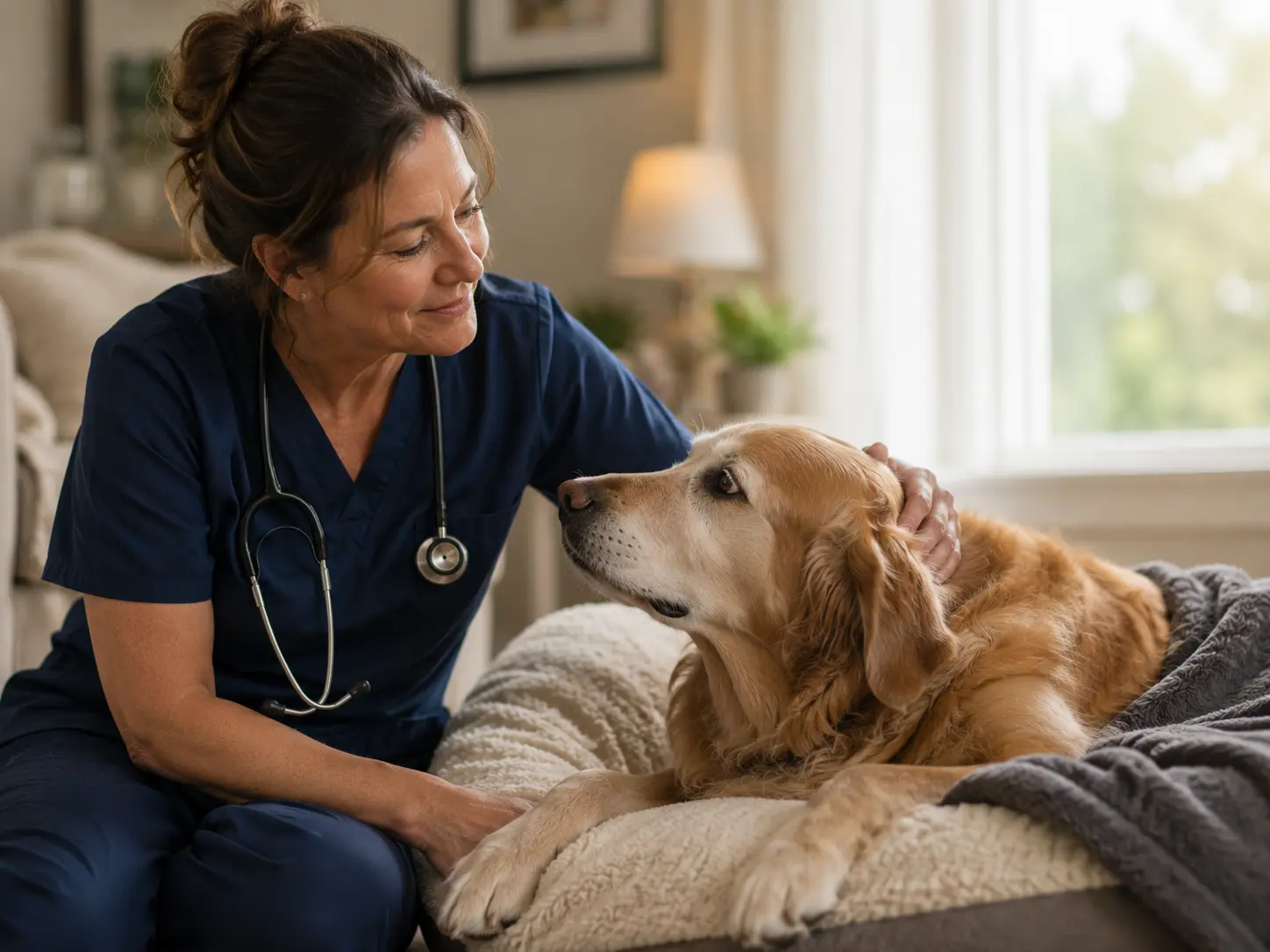
Veterinarian attending to an elderly dog.

Schedule an In-Home Visit

Call (877) 219-4811 or use the ZIP locator at the top of the page to find a Pet Loss at Home veterinarian in your area.

Frequently Asked Questions

No major preparation is needed. Choose a comfortable space where your pet feels safe, gather soft bedding or blankets, and minimize noise and distraction. The veterinarian will bring all necessary medical equipment.

Yes, in age-appropriate terms. Children who are gently informed and given the choice to participate typically cope better than children who are excluded or not told the truth. Use honest, simple language: the veterinarian will help your pet sleep peacefully, and it will not hurt.

Yes. You are welcome to hold your pet throughout the entire process if you choose. Many families do, and the veterinarian will guide the process gently so that you can remain focused on your pet.

The visit is unhurried. The veterinarian will spend time with your family before beginning, answer any remaining questions, and allow you as much time as you need before, during, and after. Most visits last between 45 minutes and an hour and a half, though there is no strict limit.

How We Created This Guide

This page was developed in collaboration with licensed veterinarians who specialize in end-of-life pet care. All clinical guidance has been reviewed for medical accuracy. Our editorial process prioritizes compassion, clarity, and evidence-based information to help families navigate one of the hardest decisions they will ever face.

Scroll to Top